To Release or Not to Release? That is the Question
Tethered Oral Tissues (TOTs), or oral restrictions such as tongue tie, are congenital abnormalities in which the oral frenulae are too tight, too short, too thick or sit in an atypical location. TOTs are one form of Orofacial Myofunctional Disorders (OMDs), and cause atypical, adaptive patterns that may impact airway, sleep, feeding, speech, feeding and swallowing.
Recent research by Diercks et al. (2020) and Hill (2024) point out that not all identified oral restrictions are the sole cause for infant feeding difficulties and the media has scrutinized the evidence and efficacy behind an increase in frenectomies. The first part of this class will review the literature and analyze the current state of why we are seeing an increase in frenectomies and what research is available to support or negate surgery.
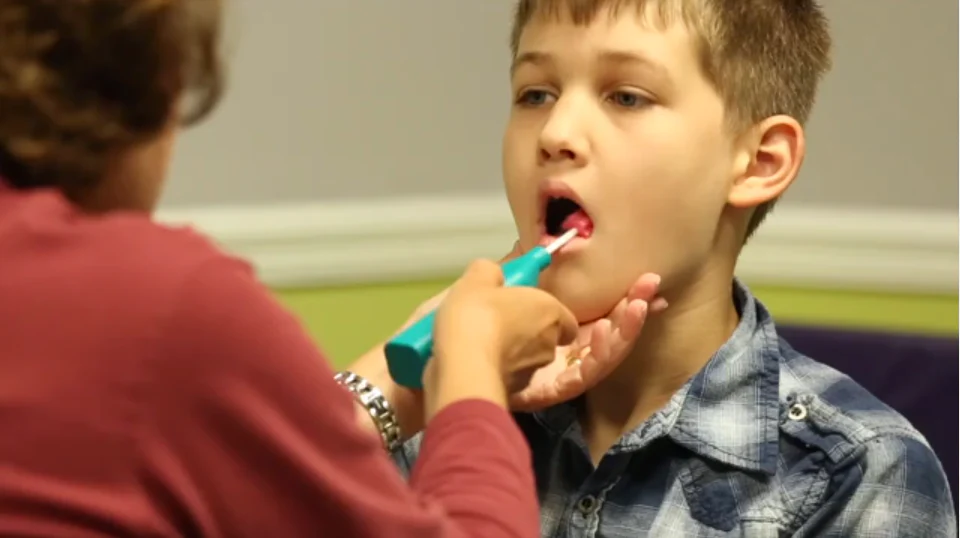
After research is explored, Robyn will discuss her parent-friendly “release readiness” protocol that discusses important factors in determining when patients have the sensory-motor and self-regulation factors to successfully undergo frenectomy or frenotomy. Although ASHA (n.d.) stated speech-language language pathologists do not determine surgery, they are often the key professionals in determining functional implications, medical necessity and release readiness by measuring how the patient responds to pre-operative interventions. Other licensed allied health professionals such as bodyworkers (ex. Physical and occupational therapists), also play an important role in ensuring a patient is ready to maximize the treatment outcomes from frenectomy/frenotomy/frenuloplasty.
Release readiness is based on age and cognitive status of the patient, medical stability, parent/caregiver training and response to intervention. Discussions on sensory processing and regulation, caregiver training goal establishment and service delivery models will be discussed.
This course is a part of Robyn’s MYOTools series and can be taken in conjunction with any of these MYOTools courses and /or TOTs courses offered by TalkTools®. The course is appropriate for parents, caregivers and all professionals on the TOTs care team.
Product Information
Product Information
Shipping & Returns
Shipping & Returns
Description
Tethered Oral Tissues (TOTs), or oral restrictions such as tongue tie, are congenital abnormalities in which the oral frenulae are too tight, too short, too thick or sit in an atypical location. TOTs are one form of Orofacial Myofunctional Disorders (OMDs), and cause atypical, adaptive patterns that may impact airway, sleep, feeding, speech, feeding and swallowing.
Recent research by Diercks et al. (2020) and Hill (2024) point out that not all identified oral restrictions are the sole cause for infant feeding difficulties and the media has scrutinized the evidence and efficacy behind an increase in frenectomies. The first part of this class will review the literature and analyze the current state of why we are seeing an increase in frenectomies and what research is available to support or negate surgery.
After research is explored, Robyn will discuss her parent-friendly “release readiness” protocol that discusses important factors in determining when patients have the sensory-motor and self-regulation factors to successfully undergo frenectomy or frenotomy. Although ASHA (n.d.) stated speech-language language pathologists do not determine surgery, they are often the key professionals in determining functional implications, medical necessity and release readiness by measuring how the patient responds to pre-operative interventions. Other licensed allied health professionals such as bodyworkers (ex. Physical and occupational therapists), also play an important role in ensuring a patient is ready to maximize the treatment outcomes from frenectomy/frenotomy/frenuloplasty.
Release readiness is based on age and cognitive status of the patient, medical stability, parent/caregiver training and response to intervention. Discussions on sensory processing and regulation, caregiver training goal establishment and service delivery models will be discussed.
This course is a part of Robyn’s MYOTools series and can be taken in conjunction with any of these MYOTools courses and /or TOTs courses offered by TalkTools®. The course is appropriate for parents, caregivers and all professionals on the TOTs care team.